b2b market research
In today’s rapidly evolving business environment, the role of data analytics in B2B market research has become increasingly significant. Companies that operate in the B2B sector face complex purchasing behaviors, longer sales cycles, and intricate decision-making hierarchies. Understanding these dynamics is essential for organizations looking to optimize their strategies and stay competitive. Data analytics provides the tools and insights necessary to navigate this complexity, offering a detailed view of customer behavior, market trends, and industry benchmarks. By leveraging advanced analytics, businesses can transform raw data into actionable intelligence, enabling more informed decisions that drive growth.
One of the key contributions of data analytics to B2B market research is its ability to identify patterns and trends within large datasets. Unlike traditional research methods, which may rely on surveys or focus groups, data analytics allows businesses to examine extensive data points quickly and accurately. For instance, analyzing purchasing histories, engagement metrics, and industry-specific datasets can reveal emerging trends and potential market opportunities. This level of insight is invaluable for B2B companies, where decisions often involve high-value transactions and long-term commitments. By understanding these patterns, organizations can anticipate client needs, adjust their marketing strategies, and create more targeted offerings that align with market demands.
Furthermore, data analytics enhances the precision of customer segmentation in b2b market research. In the B2B space, clients are often diverse, ranging from small businesses to large enterprises, each with unique needs and buying processes. Through predictive analytics and machine learning models, companies can classify clients into distinct segments based on their behavior, preferences, and purchase potential. This targeted approach not only improves the effectiveness of marketing campaigns but also strengthens client relationships by delivering solutions that resonate with specific needs. As a result, businesses can optimize resource allocation, reduce marketing wastage, and achieve higher conversion rates.
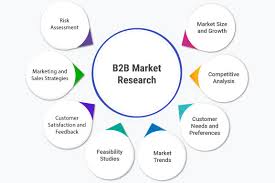
What role does data analytics play in b2b market research?
Another crucial aspect is the role of data analytics in measuring and improving performance. B2B market research is not just about understanding the market but also about evaluating the effectiveness of business strategies. Analytics tools provide real-time insights into campaign performance, sales efficiency, and customer engagement, enabling companies to refine their approach continuously. With accurate measurement and reporting, organizations can make data-driven adjustments that enhance ROI and support sustainable growth. In addition, predictive models help anticipate future market shifts, allowing businesses to proactively respond to changes rather than reacting to them after they occur.
Overall, data analytics has transformed the way businesses approach B2B market research. By offering deeper insights, precise segmentation, and actionable intelligence, it empowers companies to make smarter decisions and achieve better outcomes. Organizations that embrace data-driven research methods gain a competitive edge by understanding their markets more comprehensively and responding more strategically. In an era where information is abundant but insights are scarce, leveraging data analytics in B2B market research is no longer optional—it is essential for success and long-term growth.